
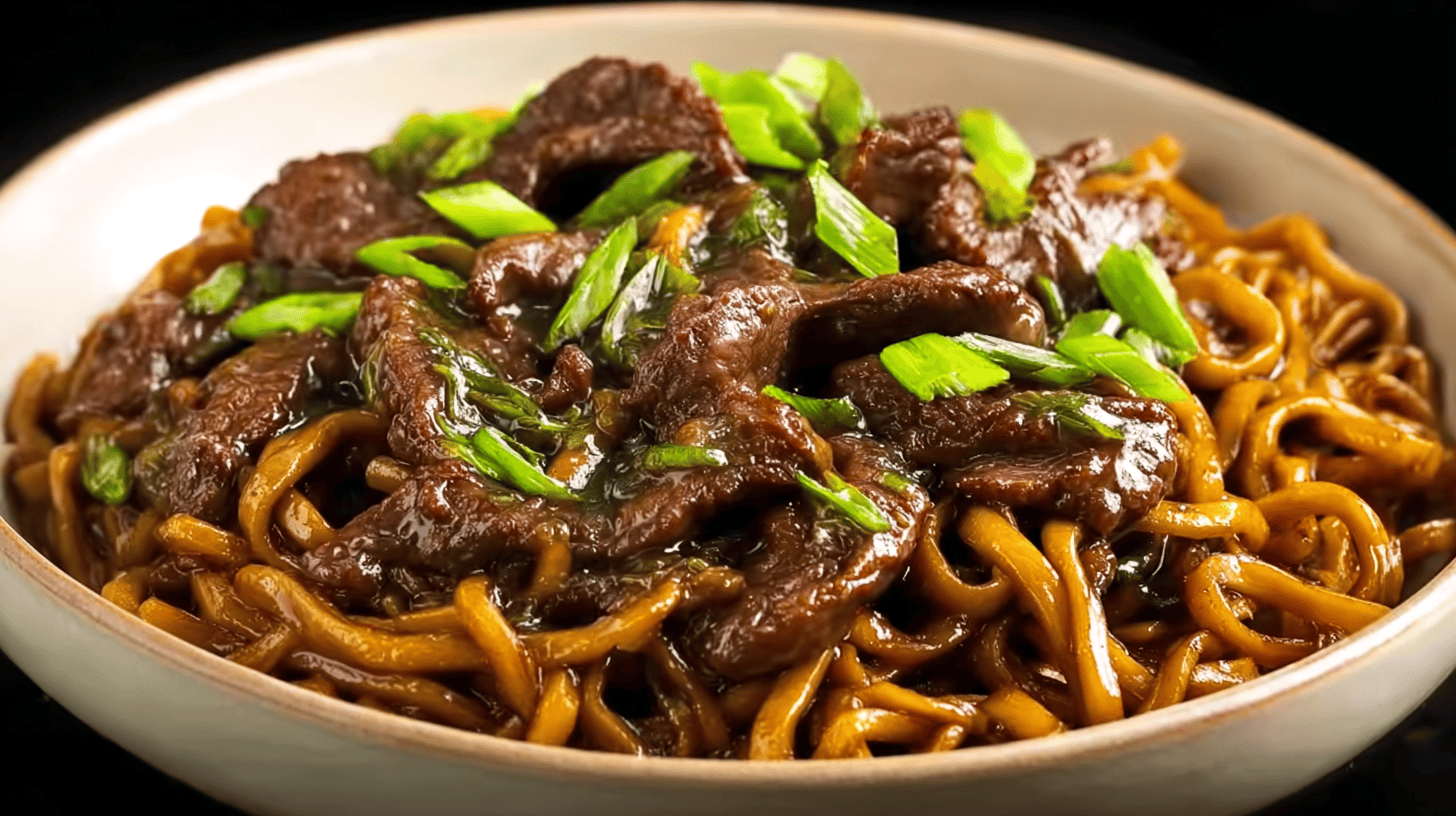
Sunny never claimed to be good at cooking, yet Mongolian Beef Noodles slowly earned a permanent place in her weekly meals. She found the idea while scrolling Pinterest one evening, looking for something filling that didn’t require complicated prep. Mongolian Beef Noodles stood out because the dish looked glossy, comforting, and realistic. It didn’t promise perfection. It promised flavor. That mattered to Sunny. She prefers recipes that allow room for small mistakes while still tasting good at the end. Mongolian Beef Noodles deliver that balance through simple ingredients, fast cooking, and a sauce that brings everything together.
Table of Contents
Why Mongolian Beef Noodles Work So Well at Home
The Appeal of Mongolian Beef Noodles for Busy Nights
Mongolian Beef Noodles feel satisfying without demanding much effort. The beef cooks quickly, the noodles soften fast, and the sauce thickens right in the pan. That speed matters on busy evenings. Sunny likes meals that don’t drag on or require multiple pots. Mongolian Beef Noodles stay contained in one main skillet, which keeps cleanup easy. The sweet and savory flavor profile also helps. It feels bold enough to replace takeout, yet familiar enough to please everyone at the table.
How Sunny Chooses This Dish Again and Again
Sunny saves recipes that look achievable. Mongolian Beef Noodles keep showing up in her saved pins because they rely on pantry staples. She doesn’t need to shop for specialty sauces or unusual cuts of meat. The dish also adapts well when she changes small details. That reliability builds trust. When a recipe works more than once, Sunny keeps it.
Ingredients That Shape Mongolian Beef Noodles
Core Ingredients Used Every Time
Mongolian Beef Noodles start with simple items that play clear roles. Ground beef forms the savory base and absorbs sauce easily. Noodles provide structure and soak up flavor. Soy sauce adds salt and depth, while brown sugar balances it with sweetness. Garlic and ginger add warmth without overpowering the dish. Green onions finish the bowl with a mild bite and freshness.
Ingredient List for Mongolian Beef Noodles
1 pound ground beef
8 ounces noodles of choice
1/3 cup soy sauce
1/3 cup brown sugar
3 cloves garlic, minced
1 teaspoon ginger
2 green onions, sliced
Easy Ingredient Adjustments at Home
Sunny often swaps ingredients without stress. She uses spaghetti when lo mein isn’t available. She lowers the brown sugar when she wants a less sweet result. When fresh ginger isn’t around, she skips it. Mongolian Beef Noodles stay flavorful because the sauce carries the dish. These small changes don’t break the recipe, which makes it forgiving and repeatable.
How to Cook Mongolian Beef Noodles Step by Step
Cooking Flow That Feels Natural
Sunny approaches Mongolian Beef Noodles without rushing. She starts by boiling the noodles according to the package directions and drains them just before they soften too much. While the noodles cook, she browns the ground beef in a skillet over medium heat, breaking it apart as it cooks. Once the beef turns fully brown, she adds garlic and ginger and stirs briefly. She pours in the soy sauce and brown sugar next, letting the mixture simmer until it thickens slightly. Finally, she adds the noodles and tosses everything together until coated.
Cooking Steps for Mongolian Beef Noodles
Boil noodles according to package directions and drain
Brown ground beef in a skillet over medium heat
Add garlic and ginger and stir briefly
Pour in soy sauce and brown sugar and simmer
Add cooked noodles and toss until coated
Serve warm
Fixes for Common Cooking Issues
If the sauce thickens too much, Sunny adds a small splash of water and stirs until smooth. If the noodles clump, she separates them gently instead of stirring hard. When the beef feels dry, the sauce quickly brings moisture back. Mongolian Beef Noodles respond well to small fixes, which keeps the cooking experience relaxed.
Serving and Storing Mongolian Beef Noodles
How Sunny Serves This Dish
Sunny usually serves Mongolian Beef Noodles straight from the skillet into bowls. The noodles already look glossy and inviting, so extra garnish feels optional. When cooking for others, she sets the skillet in the center of the table and lets everyone serve themselves. The dish works well without side items, which keeps meals simple.
Leftovers and Reheating Tips
Mongolian Beef Noodles store well in airtight containers in the refrigerator for up to three days. When reheated, the sauce loosens and coats the noodles again. Sunny often enjoys leftovers for lunch because the texture holds and the flavor stays balanced. This makes the recipe practical beyond the first meal.
Why Mongolian Beef Noodles Fit Real Cooking Habits
A Recipe That Builds Confidence
Sunny trusts Mongolian Beef Noodles because they don’t punish mistakes. She doesn’t need exact timing or perfect measurements. The dish teaches her to watch texture and taste instead. That confidence carries into other meals she tries later.
A Dish Worth Repeating
Mongolian Beef Noodles succeed because they match how people actually cook. They rely on flexible ingredients, fast steps, and forgiving techniques. Sunny keeps returning to this recipe because it delivers comfort, flavor, and reliability every time. Mongolian Beef Noodles prove that simple cooking can still feel satisfying and complete.
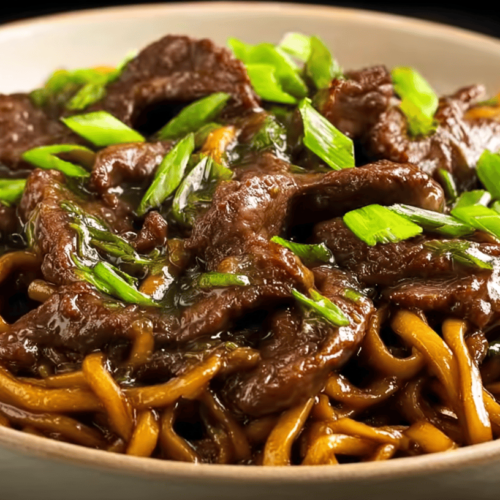
Mongolian Beef Noodles
Ingredients
- Ingredients
- 1 pound ground beef
- 8 ounces noodles lo mein, spaghetti, or ramen without seasoning
- ⅓ cup soy sauce
- ⅓ cup brown sugar
- 3 cloves garlic minced
- 1 teaspoon ginger
- 2 green onions sliced
Instructions
- Instructions
- Cook the noodles according to package directions and drain well.
- Heat a large skillet over medium heat and add the ground beef.
- Break the beef apart and cook until fully browned.
- Add the minced garlic and ginger and stir for about 30 seconds.
- Pour in the soy sauce and brown sugar and stir until combined.
- Let the sauce simmer until slightly thickened.
- Add the cooked noodles to the skillet and toss until evenly coated.
- Remove from heat and garnish with green onions if desired.
Notes
Reduce the brown sugar slightly for a less sweet sauce.
Add a splash of water if the sauce becomes too thick.
Store leftovers in an airtight container in the refrigerator for up to 3 days.