
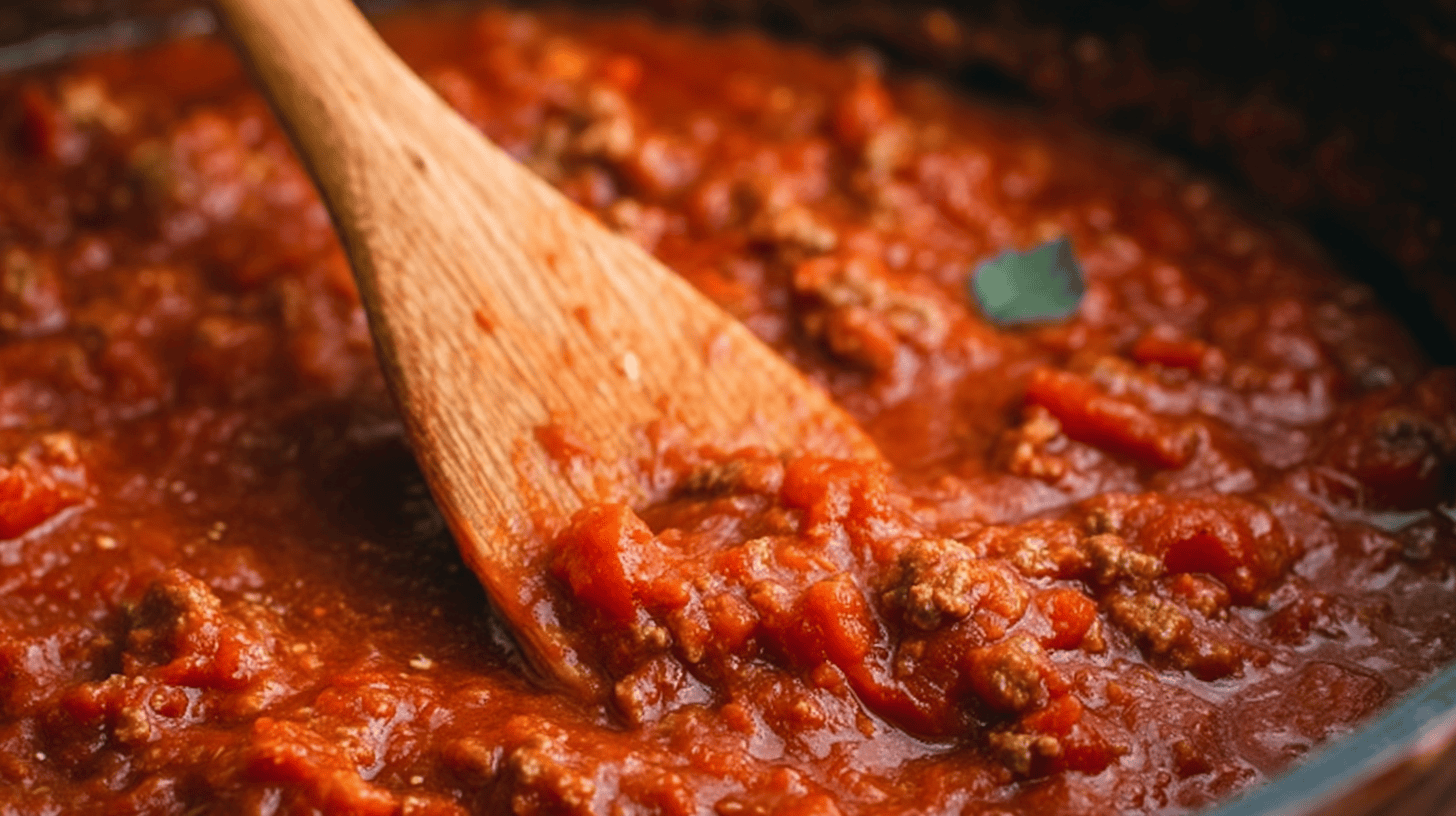
Sunny found the recipe late one evening while scrolling YouTube shorts, half-watching cooking clips after a long day. One video showed a pot of deep red sauce simmering slowly, and it reminded her of Sunday dinners that always felt warm and unhurried. She is not an expert cook, yet she enjoys recipes that promise comfort more than perfection. Homemade spaghetti sauce felt approachable. Even if it simmered too long or tasted slightly different each time, she liked the idea of building flavor step by step. That moment pushed her into the kitchen, trusting the process instead of worrying about mistakes. This homemade spaghetti sauce carries that same spirit: relaxed, familiar, and deeply satisfying.
Table of Contents
Homemade Spaghetti Sauce Basics
What Defines a Good Homemade Spaghetti Sauce
Homemade spaghetti sauce relies on simple ingredients and steady simmering. Unlike jarred sauce, it builds depth gradually. Tomatoes form the base, while aromatics like onion and garlic shape the flavor early. Herbs and seasoning follow, adding balance instead of sharpness. The goal is not speed. Instead, patience allows everything to blend smoothly.
A good homemade spaghetti sauce tastes full without feeling heavy. The sauce should coat pasta evenly rather than slide off. Texture matters just as much as flavor. When cooked properly, the sauce thickens naturally, without relying on fillers. Because of that, each spoonful feels intentional. This approach keeps the recipe dependable and repeatable.
Why Simmering Matters for Flavor
Simmering transforms individual ingredients into one unified sauce. At first, tomatoes taste bright and slightly acidic. Over time, heat softens that edge. Meanwhile, onions sweeten, and garlic mellows. Herbs release aroma slowly instead of all at once. This gradual process creates a rounded flavor that quick sauces cannot match.
Simmering also controls consistency. As liquid reduces, the sauce thickens. Stirring occasionally prevents sticking while helping flavors circulate. Because of this, homemade spaghetti sauce improves the longer it cooks, within reason. Rushing this step often leads to a flat result.
Ingredients for Homemade Spaghetti Sauce
Ingredient List With Measurements
All ingredients below follow the verified recipe logic and use US standard measurements.
| Ingredient | Measurement |
|---|---|
| Olive oil | 2 tablespoons |
| Onion, finely chopped | 1 medium |
| Garlic cloves, minced | 4 |
| Ground beef | 1 pound |
| Salt | 1 teaspoon |
| Black pepper | 1/2 teaspoon |
| Granulated sugar | 1 tablespoon |
| Dried basil | 1 teaspoon |
| Dried oregano | 1 teaspoon |
| Dried parsley | 1 teaspoon |
| Crushed tomatoes | 28 ounces |
| Tomato sauce | 15 ounces |
| Tomato paste | 6 ounces |
| Water | 1/2 cup |
| Bay leaf | 1 |
These ingredients work together to create structure and depth. The combination of crushed tomatoes, tomato sauce, and paste controls thickness while keeping flavor steady.
Ingredient Roles and Substitutions
Olive oil starts the flavor base and helps soften the onion. Onion adds sweetness as it cooks, while garlic contributes aroma. Ground beef gives the sauce body and richness. Tomatoes form the backbone, with paste intensifying color and flavor.
Sugar balances acidity without making the sauce sweet. Herbs add warmth rather than sharpness. If ground beef does not fit your needs, ground turkey works as a lighter option. You can also leave meat out entirely for a meatless version. The sauce still holds structure because of the tomato paste.
How to Make Homemade Spaghetti Sauce
Building Flavor at the Start
Begin by heating olive oil in a large pot over medium heat. Add chopped onion and cook until soft and translucent. This step matters because softened onion blends into the sauce instead of standing out. Add minced garlic and stir briefly until fragrant.
Next, add ground beef. Break it apart with a spoon as it cooks. Brown it evenly, then drain excess fat if needed. Season with salt and pepper while the meat cooks. Early seasoning helps flavor absorb instead of sitting on the surface later.
Simmering and Adjusting the Sauce
Once the meat cooks through, stir in sugar, basil, oregano, and parsley. Add crushed tomatoes, tomato sauce, tomato paste, water, and bay leaf. Stir well to combine everything evenly. Bring the mixture to a gentle boil, then reduce heat to low.
Let the homemade spaghetti sauce simmer uncovered for at least 30 minutes. Stir occasionally. Longer simmering, up to an hour, deepens flavor and thickens texture. Remove the bay leaf before serving. Taste and adjust seasoning if needed.
Serving and Storing Homemade Spaghetti Sauce
Best Ways to Serve the Sauce
Homemade spaghetti sauce pairs well with classic spaghetti, but it works beyond that. Serve it over penne, rigatoni, or linguine. It also layers well in baked dishes like lasagna or stuffed shells. Because the sauce stays thick, it holds up under cheese and additional baking.
Finish the dish with grated Parmesan or fresh herbs if desired. Serve hot for the fullest flavor. Because the sauce simmers slowly, it tastes balanced without needing heavy toppings.
Storage, Freezing, and Make-Ahead Tips
Store homemade spaghetti sauce in an airtight container in the refrigerator for up to four days. Reheat gently on the stove, stirring occasionally. The flavor often improves after resting overnight.
For longer storage, freeze the sauce in portioned containers for up to three months. Thaw in the refrigerator before reheating. This makes weeknight meals easier without sacrificing quality.
FAQs
Can I make homemade spaghetti sauce without meat?
Yes, you can leave out the ground beef. The tomato paste and crushed tomatoes still give the sauce structure and depth. Simmering a bit longer helps concentrate flavor.
How long should homemade spaghetti sauce simmer?
At least 30 minutes works well. However, simmering for up to 60 minutes creates a thicker texture and deeper flavor.
Why add sugar to spaghetti sauce?
Sugar balances tomato acidity. It does not make the sauce sweet when used in the correct amount.
Can I use fresh tomatoes instead of canned?
Yes, but they must be peeled and cooked down longer. Canned tomatoes stay more consistent, which makes this recipe reliable.
Does homemade spaghetti sauce freeze well?
Yes, it freezes very well. Portion it into containers and freeze for up to three months.
Homemade spaghetti sauce rewards patience and simple technique. Each step builds flavor without complication. By simmering slowly and seasoning carefully, the sauce develops a rich, balanced taste that works for everyday meals. It stores well, freezes easily, and adapts to different pasta dishes. This recipe fits home cooking that feels steady, familiar, and satisfying every time it reaches the table.
Homemade Spaghetti Sauce
Ingredients
- 2 tablespoons olive oil
- 1 medium onion finely chopped
- 4 garlic cloves minced
- 1 pound ground beef
- 1 teaspoon salt
- ½ teaspoon black pepper
- 1 tablespoon granulated sugar
- 1 teaspoon dried basil
- 1 teaspoon dried oregano
- 1 teaspoon dried parsley
- 28 ounces crushed tomatoes
- 15 ounces tomato sauce
- 6 ounces tomato paste
- ½ cup water
- 1 bay leaf
Instructions
- Heat olive oil in a large pot over medium heat. Add onion and cook until soft and translucent.
- Add garlic and cook briefly until fragrant.
- Add ground beef and cook until browned, breaking it apart as it cooks. Drain excess fat if needed.
- Season with salt and black pepper.
- Stir in sugar, basil, oregano, and parsley.
- Add crushed tomatoes, tomato sauce, tomato paste, water, and bay leaf. Stir until combined.
- Bring to a gentle boil, then reduce heat to low.
- Simmer uncovered for 30–60 minutes, stirring occasionally, until thickened.
- Remove bay leaf before serving.